
There is growing acceptance of the idea in the international community that engaging the Taliban government is a far better approach than ostracising it, observes Ambassador M K Bhadrakumar.

'If India does venture across the LoC, it will evoke a strong response.'
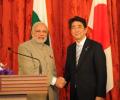
India and Japan are natural partners at sea, and Narendra Modi's recent visit underlined the need to keep the association going

The India-Japan joint naval exercises are a strategic signal for China, observes Dr Rajaram Panda.

When a Chinese warship entered Japanese waters, the Indian commander called on China to maintain discipline at sea. Dr Rajaram Panda explains the significance of the Malabar exercises between India, Japan and the US.

'Modi's initial forays into foreign policy had the flavour of Aswamedha Yagas launched by ancient kings to conquer the world.' 'He overcame the hesitations of history and explored unconventional ways to win friends and influence people.' A fascinating excerpt from Ambassador T P Sreenivasan's new book, Modiplomacy -- Through a Shakespearean Prism.

'While economic ties are making incremental progress, it is in the security and strategic domains that the India-Japan synergy is more compelling,' says Dr Rajaram Panda.
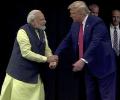
'No amount of digression can hide deflect the fact that the PM's visit was badly conceived, planned and executed,' argues Ambassador M K Bhadrakumar.

'India does not wish to remain silent in improving its strategic space so that its leverage to counter China's expansionist designs is maintained, besides enabling it to play a responsible role from a position of strength for peace and stability in Asia,' points out Dr Rajaram Panda.

'Chinese dominance reduces India's influence in South and Southeast Asia and erodes its status globally.' 'For a country striving to create a multipolar Asia, it would be a serious setback,' says Brigadier S K Chatterji (retd).

'India-US defence pacts are seen by many analysts as a subtle move to jointly contain China's growing militarism, especially in the strategic Indian Ocean Region.'
 © 2026 Rediff.com - Advertise with us - Disclaimer - Privacy Policy - Sitemap - Feedback - About us - Terms of use - Grievances